
Superabsorbent polymers (SAPs) are remarkable materials that have quietly become an essential part of modern life. From baby diapers and feminine hygiene products to agriculture, construction, medicine, and environmental protection, SAPs play a crucial role wherever water absorption and retention are required. Despite their widespread use, many people are still unfamiliar with how SAPs work and why they are so valuable.
In this article, we explore what superabsorbent polymers are, how they function, and—most importantly—their major applications across different industries.
What Is a Superabsorbent Polymer?
A superabsorbent polymer is a type of functional polymer material capable of absorbing and retaining extremely large quantities of liquid relative to its own mass—often hundreds or even thousands of times its weight in water. Once absorbed, the liquid is locked inside a three-dimensional polymer network, forming a gel-like substance known as a hydrogel.
Unlike traditional absorbent materials such as cotton, paper, or sponges, SAPs do not release water easily, even under pressure. This unique ability makes them ideal for applications that require long-term moisture retention, leak prevention, or controlled water release.
Most commercial SAPs are based on cross-linked polyacrylic acid or its sodium or potassium salts, though variations exist depending on the intended application.
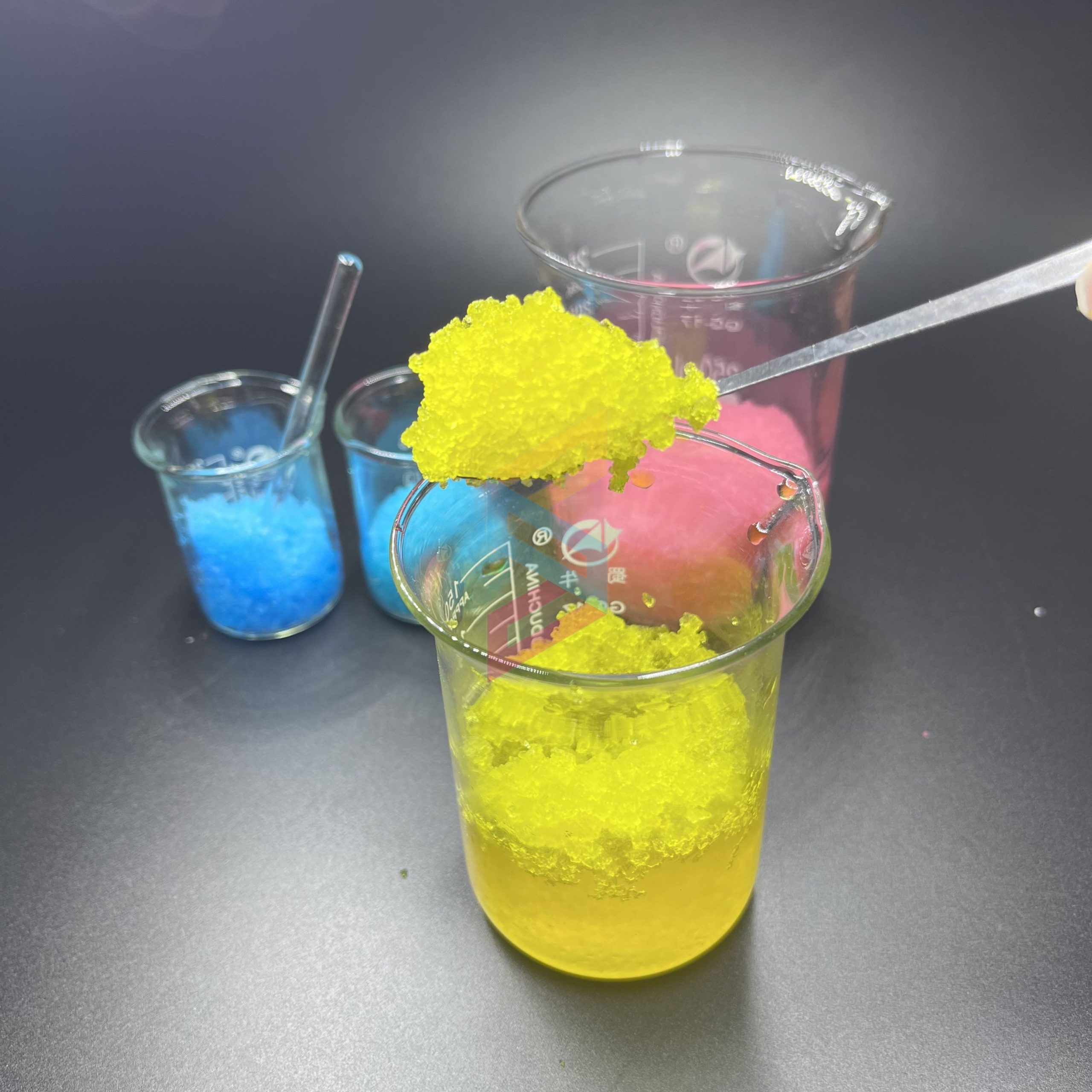

Miten superabsorbentit polymeerit toimivat?
The exceptional performance of SAPs comes from their molecular structure. SAPs consist of long polymer chains that are lightly cross-linked to form a network. These chains contain hydrophilic (water-attracting) functional groups, such as carboxyl groups.
When SAP comes into contact with water:
-
Water molecules are attracted to the hydrophilic groups.
-
Osmotic pressure causes water to flow into the polymer network.
-
The cross-linked structure prevents the polymer from dissolving.
-
The material swells and traps water inside, forming a stable gel.
This balance between absorbency and structural stability is what makes SAPs so effective.
Key Applications of Superabsorbentit polymeerit
1. Hygiene Products
The largest and most well-known application of superabsorbent polymers is in disposable hygiene products.
Baby Diapers
SAPs revolutionized the diaper industry by dramatically improving absorbency, comfort, and leak protection. Modern diapers rely on SAPs to quickly absorb urine, lock it away, and keep the baby’s skin dry. This reduces diaper rash and allows for thinner, lighter diaper designs.
Feminine Hygiene Products
Sanitary napkins and panty liners use SAPs to absorb menstrual fluid efficiently while maintaining dryness and odor control. The high absorbency of SAPs allows products to be discreet without sacrificing performance.
Adult Incontinence Products
With aging populations worldwide, SAPs are increasingly important in adult incontinence pads and briefs. They provide dignity, comfort, and reliability for users while minimizing leakage and odor.
2. Agriculture and Horticulture
Water scarcity and sustainable farming have made SAPs increasingly valuable in agriculture.
Soil Water Retention
SAPs can be mixed into soil to absorb excess water during irrigation or rainfall and slowly release it back to plant roots during dry periods. This improves water efficiency and reduces irrigation frequency.
Improved Plant Growth
By maintaining consistent moisture levels, SAPs reduce plant stress, promote root development, and enhance crop yields. They are particularly useful in arid regions, sandy soils, and landscaping projects.
Reduced Fertilizer Loss
Some SAPs can also absorb and gradually release nutrients, reducing fertilizer runoff and improving nutrient utilization.
3. Medical and Healthcare Applications
Superabsorbent polymers are widely used in medical and healthcare fields due to their biocompatibility and fluid-handling properties.
Haavasidokset
SAP-based wound dressings can absorb large amounts of exudate while maintaining a moist healing environment. This helps reduce infection risk and accelerates healing.
Medical Pads and Underlays
Hospitals use SAP-containing absorbent pads to manage bodily fluids during procedures and patient care.
Drug Delivery and Biomedical Research
Advanced SAP hydrogels are being studied for controlled drug release, tissue engineering, and regenerative medicine, where precise moisture and material control are critical.
4. Construction and Civil Engineering
In construction, water management is essential for durability and performance.
Concrete Curing
SAPs are used as internal curing agents in concrete. They absorb water during mixing and release it slowly as the concrete hardens, reducing cracking and improving strength.
Waterproofing and Leak Control
SAPs are used in sealing materials, cables, and joints. When exposed to water, they swell and block leaks automatically.
Underground and Infrastructure Projects
In tunnels, pipelines, and foundations, SAPs help manage groundwater infiltration and protect structural integrity.
5. Packaging and Food Industry
SAPs are also widely used in packaging applications, particularly for moisture control.
Food Absorbent Pads
In meat, seafood, and poultry packaging, SAP-containing pads absorb excess liquids to maintain freshness, improve appearance, and extend shelf life.
Moisture Control Packaging
SAP:t auttavat säätelemään kosteutta herkkien tuotteiden, kuten elektroniikan, lääkkeiden ja erikoiselintarvikkeiden pakkauksissa.
6. Ympäristönsuojelu ja katastrofivalmius
Superabsorbenttisilla polymeereillä on tärkeä rooli ympäristön hallinnassa ja turvallisuudessa.
Vuodon hallinta
SAP-muovit voivat imeä vesipohjaisia nesteitä teollisten vuotojen aikana ja auttaa näin eristämään saastumisen nopeasti ja tehokkaasti.
Tulvasuojelu ja vesihuolto
SAP-täytteiset esteet ja hiekkasäkkivaihtoehdot voivat imeä suuria vesimääriä tulvien aikana, joten niitä on helpompi kuljettaa ja käyttää kuin perinteisiä materiaaleja.
Jätteiden käsittely
SAP-järjestelmiä käytetään lietteen vedenpoisto- ja jätehuoltojärjestelmissä tehokkuuden parantamiseksi ja käsittelykustannusten vähentämiseksi.
7. Kulutus- ja elämäntapatuotteet
SAP-yhdisteitä esiintyy myös monissa arkipäiväisissä kulutustuotteissa.
Ilmanraikastimet ja hajunvalvonta
SAP-geelejä käytetään ilmanraikastimissa pitämään sisällään tuoksuöljyjä ja vapauttamaan niitä vähitellen ajan myötä.
Lelut ja koriste-esineet
Leluissa ja koristeissa käytettävät vettä imevät helmet ja geelit valmistetaan SAP:ista, mikä osoittaa niiden turvotusominaisuudet turvallisella ja visuaalisesti houkuttelevalla tavalla.
Lemmikkieläinten tuotteet
Lemmikkieläinten koulutustyynyt ja pehkutuotteet luottavat SAP-yhdisteisiin nopean imeytymisen ja hajunvalvonnan varmistamiseksi.
Superabsorbenttien polymeerien edut
SAP:t tarjoavat useita keskeisiä etuja kaikissa sovelluksissa:
-
Erittäin korkea imukyky
-
Erinomainen nesteen pidättyminen paineen alaisena
-
Kevyt ja tilaa säästävä
-
Parempi hygienia ja puhtaus
-
Mukautettavat ominaisuudet tiettyihin käyttötarkoituksiin
-
Tehokkuuden lisääminen ja jätteen vähentäminen
Kestävyys ja tulevaisuuden suuntaukset
Ympäristötietoisuuden lisääntyessä SAP-teollisuus kehittää aktiivisesti kestävämpiä ratkaisuja. Tutkimuksessa keskitytään seuraaviin aiheisiin:
-
Biopohjaiset ja biohajoavat SAP:t
-
Vähennetty hiilijalanjälki valmistuksessa
-
SAP-pitoisten tuotteiden kierrätettävyyden parantaminen
-
Veden suojelun ja ilmastokestävyyden kannalta optimoidut SAP:t
Tulevaisuuden SAP-järjestelmillä odotetaan olevan ratkaiseva rooli sellaisten maailmanlaajuisten haasteiden ratkaisemisessa kuin veden niukkuus, elintarviketurva, terveydenhuollon saatavuus ja kestävä infrastruktuuri.
Päätelmä
Superabsorbentit polymeerit saattavat olla useimmille kuluttajille näkymättömiä, mutta niiden vaikutus on kiistaton. SAP-muovit ovat nykyaikaisen materiaalitieteen kulmakivi, sillä ne pitävät vauvat kuivina ja sadot terveinä, parantavat sairaanhoitoa ja suojelevat ympäristöä.
Teknologian kehittyessä superabsorbenttien polymeerien käyttökohteet laajenevat edelleen ja tarjoavat älykkäämpiä ja kestävämpiä tapoja hallita yhtä arvokkaimmista luonnonvaroistamme: vettä.
 Suomi
Suomi  English
  Deutsch
  Español
  Français
  Русский
  日本語
日本語  العربية
  Italiano
  한국어
한국어  Tiếng Việt
  简体中文
简体中文  Dansk
Dansk  हिन्दी
  Íslenska
  Bahasa Indonesia
  香港中文
香港中文  Türkçe
  English (Australia)
  English (Canada)
  English (New Zealand)
  English (South Africa)